

Benefits of Risk Management for Businesses
Learn how risk management 📊 boosts business growth, ensures financial stability 💰, improves compliance ✔️, and protects your reputation in Kenya.
Edited By
Oliver Hughes
Effective risk management is not just a box to tick for Kenyan businesses—it’s what keeps a company afloat when unexpected challenges hit. Kenyan enterprises, from small kiosks in Nairobi to larger manufacturers in Mombasa, face risks daily. These range from currency fluctuations, supply chain hiccups, government policy shifts, to security threats. Understanding how to handle these risks strategically can mean the difference between growth and closure.
Risk management involves identifying potential threats, assessing their impact, and deciding how best to deal with them. For example, a local exporter might face the risk of delayed payments due to foreign currency exchange issues. By assessing this risk early, the business can opt for payment terms in Kenyan Shillings or use forward contracts offered by banks like KCB or Equity to lock in exchange rates, reducing uncertainty.
Another common risk for Kenyan traders is unreliable suppliers during the long rains season when road conditions worsen. A smart approach includes diversifying suppliers across regions or keeping buffer stocks to maintain steady operations.
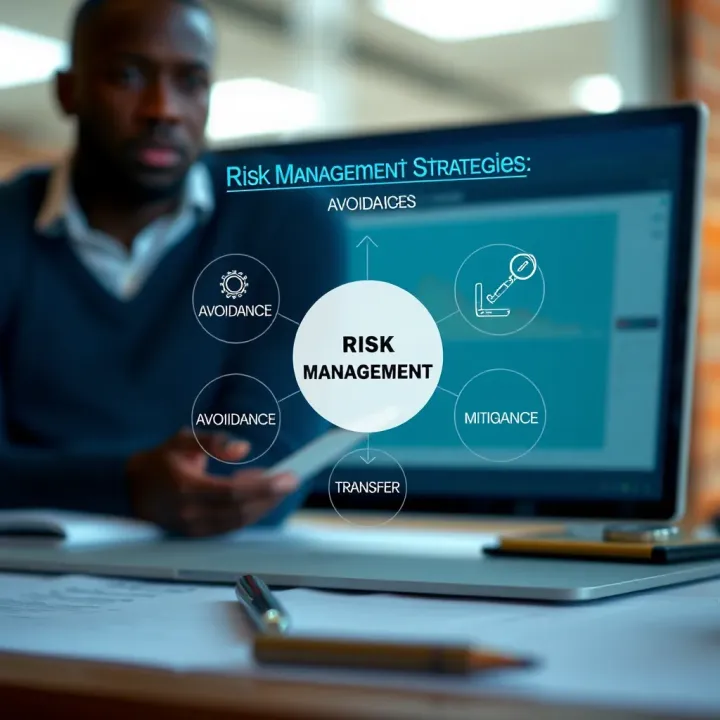
Managing risk doesn’t mean avoiding all threats but knowing which ones to accept, reduce, or transfer to keep the business stable.
Risk Avoidance: Businesses might drop certain activities with high risk. For instance, an SME may avoid importing fragile electronics if transport conditions are too risky during heavy rains.
Risk Mitigation: Implementing measures that reduce the chance or impact of risks. A Nairobi-based retailer could install power backup systems to prevent losses during frequent outages.
Risk Transfer: Shifting risk to another party, like getting insurance cover for fire or theft, or outsourcing sensitive IT services.
Risk Acceptance: Some risks are small or hard to avoid, so businesses prepare to handle potential losses.
Kenyan businesses should look at the specific environment: market demand shifts, political climate, regulatory changes (like tax policy updates from KRA), and logistical challenges. Tools like mobile banking (M-Pesa, KCB M-Pesa), digital record keeping, and even local networks help improve risk controls.
The thing is, risk management is ongoing. Markets change, so regular reviews of risk strategies keep businesses ahead of trouble. Start by mapping your company’s biggest vulnerabilities, then build your strategy from there. This prepares you not just to survive but to thrive as economic conditions evolve.
Understanding risk is the foundation of managing it well, especially for Kenyan businesses operating in a dynamic and often unpredictable environment. Risk can disrupt operations, cause financial losses, or damage a company's reputation. Kenyan enterprises that grasp the nature and impact of risk can design better strategies to protect themselves and even seize opportunities hidden within uncertainty. For example, a small-scale exporter in Mombasa might recognise that currency fluctuations can erode profits but by identifying this risk early, they can plan hedging strategies or diversify their markets.
Risk in business refers to the chance of an event occurring that could negatively affect an organisation’s objectives. This could relate to financial loss, damaged reputation, operational failure, or legal consequences. In essence, risk is about uncertainty—something that can affect profits, growth, or sustainability. It’s not just about threats but also about managing them smartly so the business can continue to operate and grow.
Financial risks involve potential losses from economic changes, currency shifts, or cash flow issues. For Kenyan businesses, fluctuating exchange rates—especially the shilling against the dollar or euro—can directly impact the cost of imported goods or the revenue from exports. For instance, a Nairobi-based importer of electronics might face increased costs if the shilling weakens against the US dollar, reducing profit margins unless prices adapt quickly. Similarly, delays in customer payments or over-reliance on one revenue source can strain cash flow, affecting daily operations.
Operational risks relate to internal processes and systems failing. This could be machinery breakdown in manufacturing firms, supply chain disruptions for retailers, or IT system failures for service companies. In Kenya, challenges such as inconsistent power supply, poor road infrastructure, or unreliable raw material sources often create operational hurdles. For example, a bakery in Eldoret may face production stoppages if frequent power outages occur, impacting delivery schedules and customer satisfaction.
Regulatory risks come from changes in laws, regulations or government policies that affect business activities. Kenyan firms must keep tabs on tax adjustments by the Kenya Revenue Authority (KRA), labour laws, or environmental regulations as non-compliance can lead to fines or licence revocations. Recently, stricter guidelines on waste disposal affected manufacturing plants around Nairobi, forcing them to invest in proper waste management to avoid penalties.
Market risks involve shifts in customer preferences, competitor actions, or broader economic conditions that affect demand. For instance, with the expansion of e-commerce platforms like Jumia and Kilimall, traditional brick-and-mortar shops in Nairobi have seen reduced foot traffic, requiring adaptation in marketing and sales approaches. Inflation and changes in consumer spending power also influence how products and services are priced and sold.
Reputational risks concern damage to the public image or trust in the business. Negative social media posts, poor customer service, or association with unethical practices can affect sales sharply. A good local example is a restaurant chain facing backlash after food safety concerns went viral, causing customers to choose competitors. Protecting reputation means establishing clear standards and responding quickly to issues to maintain confidence.
Neglecting risk management can lead to serious operational and financial troubles. Businesses may suffer unexpected losses, face legal penalties, or lose customers when issues are not anticipated or managed. Take the case of a company that ignored cybersecurity risks—once data breaches happen, costs skyrocket in recovery, legal fees, and lost client trust. Poor risk management also limits a company's ability to plan effectively, making it vulnerable during economic downturns or crises. In the Kenyan context, failing to manage regulatory or market risks could mean losing out to competitors who innovate or comply rapidly.
Proper risk understanding is not just about avoiding trouble but about giving Kenyan businesses the confidence and tools to navigate tomorrow's challenges while still aiming for growth.
This section highlights why recognising risk types and their effects helps the Kenyan business community prepare better and run smoother operations, safeguarding livelihoods and investments alike.
Managing risk effectively requires a clear, step-by-step approach that guides businesses from spotting potential threats to keeping an eye on progress. In Kenya's shifting business landscape, following systematic steps allows traders, investors, and brokers to make informed decisions that protect assets and ensure steady growth.
Brainstorming sessions are a hands-on way for teams to gather diverse viewpoints on potential risks. By bringing together staff from different departments, such as sales, finance, and operations, businesses in Nairobi or Mombasa can discover threats that might slip under the radar — like pending regulatory changes by the Kenya Revenue Authority (KRA) or supply chain hiccups during the long rains. These sessions encourage open dialogue and can be done periodically or when launching new projects.

Surveys and checklists offer a structured path to uncover risks. Preparing detailed checklists helps SMEs or larger firms evaluate specific business areas: compliance, equipment condition, or financial health. For instance, a survey might ask about overdue regulatory filings or vulnerabilities in IT security. This method is especially useful when management wants to quickly assess risks across multiple branches or counties.
SWOT analysis (Strengths, Weaknesses, Opportunities, and Threats) helps businesses chart internal and external factors shaping their risk profile. A Kenyan exporter, for instance, might note strengths in product quality but identify weaknesses in limited logistics networks. Opportunities could come from East African Community (EAC) trade deals, while threats may include currency fluctuations or political unrest affecting demand. SWOT creates a balanced picture, pointing where to focus risk mitigation efforts.
Qualitative assessment involves ranking risks based on their likelihood and impact without heavy data. For example, a retailer in Kisumu might judge the risk of theft as high likelihood but moderate impact, while the chance of a sudden tax hike may be low but with severe consequences. This approach suits firms with limited resources or data, providing a quick measure for decision-making.
Quantitative assessment uses numbers and statistics for more precise evaluation. A logistics company might analyse historical delays and costs to predict financial losses from route disruptions. This method helps allocate budget efficiently, ensuring resources go where the biggest risks lurk. It requires good records and sometimes software tools but brings clarity when managing complex risks.
Risk matrix application combines the previous assessments into a visual chart showing risks' severity and probability. Plotting risks in a matrix makes priorities obvious—those in the high-impact, high-likelihood zone demand immediate action. Kenyan SMEs can use simple tools like Excel to build their risk matrix, providing a handy reference during strategy planning or stakeholder discussions.
Risk management is not a one-off task; ongoing tracking is vital to stay ahead of new threats or changing conditions. For Kenyan businesses, this could mean regularly updating risk registers after major events like election cycles or fluctuations in exchange rates. Consistent review ensures strategies remain relevant, allowing adjustments in policies or training as the business environment evolves.
Continuous monitoring helps catch emerging risks early, keeping your business resilient against shocks.
Adopting these steps enables Kenyan enterprises to manage risks confidently, improving their chances in a competitive market and reducing costly surprises.
Kenyan businesses face a mix of challenges, from unstable markets to changing regulations. Understanding common risk management techniques helps organisations pinpoint practical ways to deal with these risks. Applying the right technique not only protects a business’s assets and reputation but also keeps operations flowing smoothly, even when surprises hit.
Risk avoidance means deliberately staying away from actions or ventures likely to bring loss. For instance, a Kenyan exporter avoiding markets with volatile political climates reduces chances of payment defaults or shipment delays. This technique isn’t about being timid; it’s about choosing where not to play so resources aren’t wasted chasing high-risk deals.
Diversifying products or markets helps spread risk. If a business relies too heavily on one product or one market, a simple hiccup can cause major losses. For example, a Nairobi-based textile company expanding to sell school uniforms alongside casual wear can cushion against seasonal drop-offs or changing consumer tastes.
Improving internal controls means tightening up processes to reduce errors or fraud. Kenyan companies often face risks from poor cash handling or inventory mismanagement. Simple steps like segregating duties, using accounting software, and regular audits help spot problems early before they escalate.
Staff training and capacity building equip teams to manage risks actively. For example, training employees on cybersecurity basics protects against phishing attacks common in Nairobi offices. Skilled workers who understand operational risks can respond faster, reducing downtime and losses.
Insurance policies relevant to Kenyan businesses play a vital role. From fire and theft to business interruption and public liability insurance, these policies shift financial losses to insurers. A small retail shop in Kisumu, for example, may buy stock insurance to avoid wiping out the whole business after a burglary.
Outsourcing certain operations can transfer risk away from in-house teams. A growing SME might outsource delivery services instead of running its own fleet, avoiding maintenance costs and liability. This also frees management focus for core activities.
Contractual risk sharing involves clauses in agreements that allocate risk between parties. Construction contracts often include provisions where contractors take liability for site accidents, protecting the project owner from expensive claims.
Evaluating risk appetite means understanding which risks a business can afford to take. Some risks are worth accepting because their potential rewards outweigh losses. A tech startup in Nairobi might accept customer credit risks initially to build market share, planning for some bad debts.
Setting contingency plans prepares companies to respond if risks materialise. For instance, a Kenyan agribusiness might have alternative suppliers ready in case drought disrupts local crop supply. Even when a risk is accepted, readiness minimises damage.
Effective risk management is not about avoiding every risk but about picking the right approach for each situation. Kenyan businesses that balance avoidance, reduction, transfer, and acceptance stand a better chance of thriving amid uncertainty.
In today’s business environment, Kenyan companies cannot overlook technology's role in managing risks effectively. As markets grow more volatile and regulations tighten, tools designed for risk tracking and analysis enable firms to spot trouble early and respond swiftly. This isn’t just about having fancy software; it’s about adopting practical solutions that fit local business needs and constraints.
ERP systems help businesses coordinate various operational areas—from finance to human resources to supply chain management. For Kenyan companies, especially medium and large enterprises, this integration means risks are less likely to slip through the cracks. For instance, with real-time financial data accessible, a business can detect cash flow gaps early and avoid liquidity crises. A Nairobi-based manufacturing firm using ERP noted improved compliance with tax obligations through automated updates linked to KRA regulations, avoiding costly fines.
Specialised risk management software provides structured frameworks for identifying, assessing, and prioritising risks. Local banks and insurers have turned to these solutions to keep track of loan defaults and claims, allowing quicker and more accurate risk profiling. Tools like MetricStream, SAP Risk Management, or locally adapted versions let users visualise risk matrices and action plans in one place. Instead of paper-based registers or disjointed Excel sheets, these platforms support continuous updates and generate reports aiding decision-making.
Given Kenya’s widespread mobile penetration, apps tailored for risk monitoring offer significant advantages. SMEs in Nairobi and Mombasa, for example, use mobile apps to report operational issues instantly—be it a supply delay or a security breach. These apps enable managers to respond without waiting for formal meetings, cutting down reaction times. Features like push notifications and geo-tagging make on-site risk reporting practical even in informal sectors or remote areas.
Big data analytics help businesses understand market risks by analysing vast information sets—sales trends, customer behaviour, and economic indicators. Kenyan traders, especially on the NSE (Nairobi Securities Exchange), leverage data analytics to predict stock performance and market fluctuations. By monitoring consumer spending linked to mobile money transactions or weather patterns affecting harvests, firms can adjust strategies proactively, reducing exposure.
Using hard data instead of gut feeling helps firms prioritise resources where risks are highest. Whether in agriculture, retail, or finance, decision makers in Kenya benefit from dashboards that combine sales figures, customer feedback, and supplier performance. This approach increases accountability and transparency. For instance, a retailer in Nakuru used sales and inventory data to adjust stocks during the rainy season, avoiding losses caused by overstocking perishable goods.
Effective risk management in Kenya relies heavily on integrating the right tools and technologies to spot threats early and make informed decisions. This is especially vital for businesses navigating dynamic markets and regulatory environments.
Overall, digital tools and data analytics empower Kenyan businesses to reduce surprises, save costs, and sustain growth under pressure. Yet, adoption should match capabilities and budgets—complex software is less useful if staff aren’t trained or systems aren’t maintained. That said, incremental use of simple, practical tech can make a big difference.
A strong risk-aware culture is vital for Kenyan businesses looking to thrive amid uncertain market conditions and regulatory changes. It means everyone, from top management to shop floor staff, understands the risks the business faces and their role in managing them. This mindset helps the organisation spot issues early, avoid costly mistakes, and respond swiftly to challenges.
Leadership sets the tone for risk awareness in the workplace. Managers must model good risk practices by incorporating risk assessment in decision-making and communicating openly about potential threats. For example, in Nairobi's bustling jua kali sector, a workshop owner who regularly reviews safety procedures and enforces them creates a safer environment for workers and customers. Leaders should also ensure adequate resources are available for risk management activities, such as funding training and investing in proper equipment.
Without clear guidance from the top, employees may underestimate the importance of risk or see it as someone else's problem. Leaders need to make risk management a visible priority, linking it directly to business goals and performance evaluations.
Training helps staff recognise risks in their daily tasks and take appropriate actions. Whether it’s a cashier spotting fraudulent transactions at a retail shop or a driver following safety protocols to avoid accidents, practical training enhances vigilance and confidence. Kenyan businesses should tailor sessions to reflect local realities—for instance, discussing the impacts of frequent power outages or the risks of riding boda boda to work.
Regular refresher courses keep risk knowledge current, especially as new threats emerge or company procedures change. Sharing case studies from Kenyan firms that faced setbacks due to poor risk management also drives the message home effectively.
Open communication channels let employees report risky situations or near misses without fear of blame. In Kenyan workplaces where hierarchy sometimes stifles voice, management must encourage feedback and listen genuinely. Setting up anonymous reporting tools or suggestion boxes can complement face-to-face discussions.
A culture that values transparency helps unearth hidden risks early, preventing small issues from snowballing. For example, in a Nairobi logistics company, drivers alerting management about unsafe road conditions enabled timely route adjustments that lowered accident rates.
Building a risk-aware culture is not a one-off exercise but requires ongoing commitment. It transforms risk management from a checkbox activity into a shared responsibility that shields the company’s future.
In summary, Kenyan businesses that invest in leadership involvement, tailored training, and open communication build a resilient culture ready to face risks head-on. This cultural foundation complements technical controls and ensures risk management is genuinely effective across all levels.
Learn how risk management 📊 boosts business growth, ensures financial stability 💰, improves compliance ✔️, and protects your reputation in Kenya.

Explore how to build and maintain practical Enterprise Risk Management frameworks 🛡️ for stronger oversight, compliance, and smarter decisions in Kenya and beyond.

Discover practical financial risk management tips 📊 for professionals & students in Kenya. Learn methods, tools & get useful PDFs to manage risks confidently.
Explore how risk management helps businesses identify, assess, and control threats to protect capital and earnings for smarter decisions across sectors. 📊🔒
Based on 7 reviews