

Forex Trading Apps for Kenyan Beginners
Discover the best forex trading apps for beginners in Kenya 🇰🇪. Get tips on features, safety, and avoiding common mistakes for a smart start 📱💹.
Edited By
Sophia Reynolds
Forex trading, simply put, means buying one currency while selling another. It opens a chance to make money by guessing how currencies will move. In Kenya, forex trading is growing fast with more people exploring it as a source of extra income or full-time work.
For beginners here, the key is to understand the basics clearly before risking your hard-earned shillings. Many jump in without knowing the ropes and end up losing money. This guide will help by giving straightforward practical advice tailored for the Kenyan market and local regulations.

Trading forex requires patience and discipline. Quick wins happen but are rare; steady growth comes from sound strategies and managing risks well.
Kenya’s economy depends a lot on foreign exchange since we import many goods and depend on remittances. Fluctuations in currencies like the US dollar (USD), euro (EUR), and even the Tanzanian shilling (TZS) affect prices locally.
Forex trading lets you benefit directly from these changes. For example, if you expect the USD to strengthen against the Kenyan shilling (KES), buying USD in advance might bring profit.
Starting out needs a few practical steps:
Find a reliable broker: Check they are licensed and regulated, often by the Capital Markets Authority (CMA) in Kenya or reputable foreign regulators.
Open a trading account: Most brokers offer demo accounts to practise without risking real money.
Learn key terms: Understand pips (price movements), lots (trade sizes), leverage (borrowing power), and spreads (difference between buy and sell prices).
Study the market: Follow currencies that affect Kenya directly, like USD/KES, EUR/KES, GBP/KES.
Always start small with your capital. For example, KSh 5,000 is enough to begin practising.
Use M-Pesa to fund or withdraw from your trading account where supported.
Keep an eye on KRA rules for taxation on forex profits.
Join local forums or social media groups to learn from experienced Kenyan traders.
The forex market operates 24 hours a day, Monday to Friday, so you can trade anytime convenient, even after your day job. But remember, patience and learning steadily beats rushing into trades without preparation.
With this foundation, you are set to explore forex trading further, building the skills and knowledge needed to succeed.
To succeed in forex trading, understanding its basics is non-negotiable. Knowing how the forex market operates helps you make informed decisions instead of guessing blindly. For Kenyan traders, this knowledge is especially practical because the forex market reacts differently to local and global issues, and being aware of these reactions can protect your investment.
The foreign exchange market, often called forex or FX, is where currencies are bought and sold. Unlike stock markets with physical locations, forex is decentralised and operates 24 hours a day due to global trading centers in London, New York, Tokyo, and others. This continuous operation allows traders in Nairobi or Mombasa to trade at almost any time. The forex market's huge daily turnover, exceeding $6 trillion globally, means there is ample liquidity, making it easier to enter or exit trades quickly.
Forex trading involves buying one currency while selling another, and these are presented as pairs such as USD/KES or EUR/USD. The price of the pair shows how much of the second currency you need to buy one unit of the first. For instance, if USD/KES quotes at 110, it means one dollar costs 110 Kenyan shillings. Kenyan traders must pay attention to both currencies because events affecting the US or Kenya can impact the pair’s price. Understanding pairs helps traders know what they are really betting on – whether they expect the Kenyan shilling to strengthen against the dollar or the other way round.
Currency prices swing because of supply and demand in the market. If many want to buy the US dollar using Kenyan shillings, demand for USD rises, pushing its price up relative to KES. Factors like import-export balances, tourism, and foreign investment influence these shifts. For example, if Kenya hits a tourism boom, demand for shillings might increase as foreign tourists exchange their money, strengthening KES.
Economic data releases such as GDP growth, inflation rates, or unemployment figures affect currency values. If the US reports stronger-than-expected economic growth, traders may buy USD anticipating better returns, making USD stronger against KES. Kenyan traders should monitor not only local data but also major economies because their events ripple through forex pairs involving KES.
Central banks wield significant influence as they set interest rates and intervene in currency markets to stabilise their economies. The Central Bank of Kenya, for instance, might adjust rates to control inflation, impacting KES value. Geopolitical tensions or major elections could create uncertainty, leading traders to move money to safer currencies like USD or EUR. Staying informed on such news helps avoid surprises and losses.
The spot market is where currencies are exchanged "on the spot," meaning transactions settle typically within two business days. It reflects the current market price and is the most common way retail traders buy and sell forex. For example, a Nairobi trader buying USD/KES on the spot market sees immediate price changes and can react quickly to market moves.
Forward contracts fix the exchange rate today for a currency trade set to happen in the future, usually beyond two days. Kenyan businesses dealing with imports or exports often use forwards to hedge against currency risk, ensuring they know exactly how much KSh they will pay or receive later regardless of market fluctuations.
Futures are similar to forwards but are standardised contracts traded on exchanges. They obligate traders to buy or sell a currency at a set price on a future date. Though less common among Kenyan retail traders due to complexity, futures are widely used by institutional investors for risk management or speculation. Understanding these instruments enriches a trader’s grasp of the different tools available in the forex world.
Knowing how forex works and what moves currency prices equips Kenyan traders to manage risk and spot opportunities. Each concept—from currency pairs to contract types—adds a piece to the puzzle of smart forex trading.
Be sharp on how supply and demand shape currency moves
Watch economic news for market surprises
Understand when and why central banks step in
Choose the right forex market and instruments for your goals
This foundation sets you up for smarter trading decisions tailored to both global trends and Kenya’s unique market dynamics.

Beginning forex trading without a proper setup is like trying to drive a matatu without a Licence and a route plan. Understanding the key steps upfront saves you from costly mistakes and sets you on a steady path.
Kenyan traders must work with brokers regulated by recognised authorities such as the Capital Markets Authority (CMA) in Kenya. This regulation protects your money from fraud and ensures fair trading practices. Although some international brokers may not be CMA-licensed, they might hold licences from respected global regulators like the FCA (UK) or ASIC (Australia), which also offer safeguards.
Assessing broker reputation means looking beyond flashy websites. You want to check for transparent fee structures, reviews from other Kenyan users, and clear customer support channels. Brokers charging excessive spreads or hidden fees can quickly eat into profits. Keep an eye out especially for those whose withdrawal processes are complicated or delayed.
Some popular brokers frequently accessed by Kenyan traders include XM, HotForex, and Exness. These firms offer easy account opening, accept local payments, and have good track records among Kenyan forex communities. Choosing such brokers can ease your experience, especially if you are new to trading.
Opening an account is typically straightforward. You’ll provide identification documents, proof of residence, and complete a know-your-customer (KYC) process. Many brokers streamline this through online portals, allowing quick approvals within a day or two.
Funding your account in Kenya has become easier with mobile money options. Most brokers now accept M-Pesa payments alongside traditional bank transfers. This flexibility removes barriers and speeds up deposit times. For instance, after depositing KS,000 via M-Pesa, your trading balance can credit almost instantly.
Minimum deposit requirements vary but typically start from about KS,000 to KS0,000, depending on the broker. It's good practice to start with an amount you can afford to lose while learning how the market moves.
MetaTrader 4 (MT4) and MetaTrader 5 (MT5) are the most common trading platforms among Kenyan traders. Both platforms offer rich charting tools, automated strategies, and easy order management. The choice between them depends on your need for advanced features; MT5 supports more instruments and timeframes.
Using mobile or desktop depends on your lifestyle. Desktop offers a wider view and more tools, ideal for traders who analyse markets for hours. Mobile apps provide convenience for those who want to trade on the go but with fewer features.
Customising your workspace lets you arrange charts and indicators in ways that suit your strategy. For example, placing trend analysis on one screen and economic news feeds on another can boost decision-making efficiency.
Taking time to set your broker, funding method, and platform properly will give you a solid foundation. Without this, you risk running into problems that cost both money and time.
With these basics in place, Kenyan beginners can approach forex trading confidently, aware of local options and practical steps needed to start smoothly.
To succeed in forex trading, understanding key concepts and tools is a must. These elements act as the backbone for making sound decisions and managing trades effectively. Without grasping basics like pips or leverage, even the most tempting opportunities can lead to costly mistakes. This section breaks down such essentials, helping Kenyan traders familiarise themselves with what matters most in the forex market.
A pip (percentage in point) is the smallest price movement that a currency pair can make, typically the fourth decimal place. For example, if USD/KES moves from 110.2500 to 110.2600, that's a one pip change. Pips are important because they measure your profit or loss, so knowing how to calculate them helps you evaluate trade outcomes clearly.
Forex trading uses lots to classify trade sizes. A standard lot is 100,000 units of the base currency, which might be too large for many beginners. That’s why mini lots (10,000 units) and micro lots (1,000 units) offer more affordable entry points, allowing traders to control risk better. For instance, instead of committing KSh 11 million to one standard lot in USD/KES, you could trade with smaller lots and protect your capital.
Leverage lets you control a large position with a relatively small deposit, amplifying your buying power. Suppose your broker offers 1:100 leverage; with KSh 10,000, you can control KSh 1,000,000 worth of currency. However, while leverage can boost profits, it also multiplies losses. This double-edged sword means Kenyan traders must use leverage carefully and never risk more than they can afford to lose.
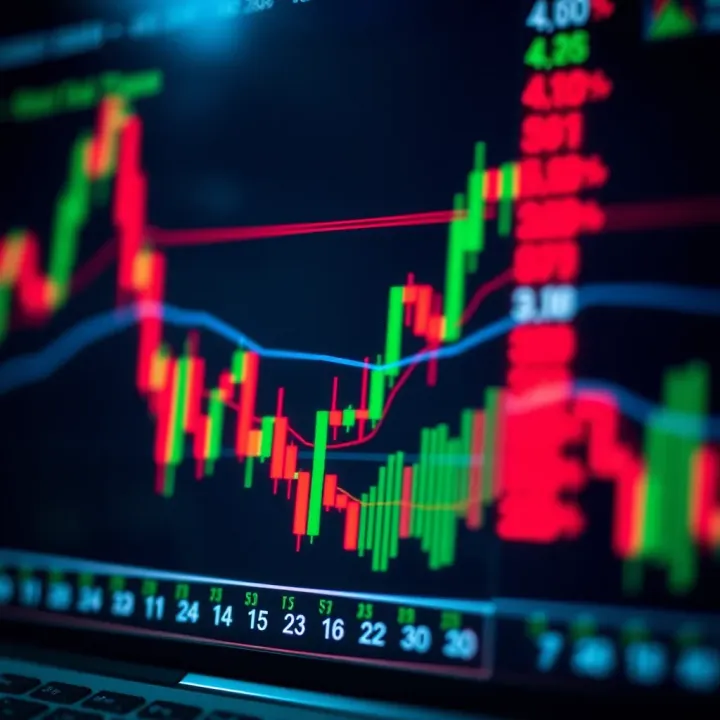
Forex charts visually represent currency price movements and come in three main types: line, bar, and candlestick charts. Line charts connect closing prices and are simple to read, but they miss intraday details. Bar charts show opening, closing, high, and low prices, giving more context. Candlestick charts are the most popular since they colour-code price movements and reveal market sentiment at a glance.
Timeframes on charts can range from minutes to months, each revealing different information. Short timeframes, like 5-minute charts, suit scalpers looking for quick trades, while daily or weekly charts help position traders focusing on broader trends. Choosing the right timeframe depends on your trading style and goals.
Basic chart patterns such as head and shoulders, double tops and bottoms, or triangles signal potential reversals or continuations. Recognising these can help traders anticipate price moves and time entries or exits better, which is crucial in fast-moving markets like forex.
Moving averages smooth out price data, highlighting trends over time. For example, a trader might watch a 50-day moving average crossing above the 200-day one as a buy signal. The Relative Strength Index (RSI) measures momentum, indicating whether a currency is overbought or oversold. RSI readings above 70 might warn of a price drop soon, while below 30 could signal a buying opportunity.
Support and resistance levels are price points where the market tends to pause or reverse. For instance, USD/KES may struggle to rise above 110.50 (resistance) but find strong buying interest near 109.00 (support). Identifying these levels helps traders set stop-losses or take profit targets wisely.
Trend lines connect higher lows in an uptrend or lower highs in a downtrend, helping traders visualise the market direction. Volume analysis checks how many trades occur, confirming the strength of price moves. A price rise with heavy volume suggests genuine interest, while low volume may warn of a false breakout.
Mastering these concepts and tools equips you to approach forex trading with confidence, as they clarify market action and guide smarter trading decisions. For Kenyan traders, combining this knowledge with local realities like currency volatility and access to reliable brokers enhances the chance of steady success.
Developing a forex trading strategy is a foundational step for any trader aiming to succeed. Without a clear plan, you risk making impulsive decisions that can drain your account quickly. A strategy helps you stay focused, manage risks, and adapt to market conditions. It outlines when to enter and exit trades, how much to risk, and which tools to use, making your trading more systematic and less reliant on guesswork.
Scalping involves making numerous trades throughout the day, each lasting just minutes or even seconds. This style demands intense focus and fast decision-making. Scalpers profit from small price movements, so they need tight spreads and low transaction costs. In Kenya, this might suit traders with access to stable internet and fast platforms like MetaTrader 4 or local brokers who offer quick execution times.
Day traders open and close all positions within the same trading day, avoiding risks tied to overnight market gaps or news events. This style suits those who can dedicate several hours daily to monitor the market but prefer to shut down before markets close. It requires discipline to stick to the trading hours and avoid holding positions longer than intended.
Swing trading focuses on capturing price swings over days or weeks. Traders hold positions longer than day traders but shorter than position traders. This style works well for Kenyans balancing trading with other commitments, as it requires less constant monitoring. Swing traders rely on both technical signals and fundamental news to identify when trends might reverse or continue.
Position traders keep trades open for weeks to months, betting on long-term market trends. This suits those who prefer a hands-off approach and can withstand short-term price fluctuations. For instance, a position trader might speculate on the Kenyan shilling versus the US dollar based on expected economic policy changes. This style demands patience and solid fundamental analysis.
Fundamental analysis involves studying economic indicators like inflation, GDP, and employment figures, plus central bank decisions. For example, if the Central Bank of Kenya changes its policy rate, it can affect the shilling’s strength. Keeping an eye on announcements from KRA or global events like US Federal Reserve meetings helps you anticipate market moves.
Technical analysis uses price charts and indicators to time your trades. Identifying support and resistance levels or patterns like head and shoulders can guide when to buy or sell. Combining this with fundamental insights improves your trading decisions, especially in volatile markets where timing is crucial.
Forex markets can be choppy, especially during elections or global shocks. During these times, adjusting your approach—like tightening stop-loss orders or reducing trade sizes—helps protect your capital. Staying flexible and responding to changing conditions is key for Kenyan traders who face both local and international events.
Demo accounts allow you to try your trading plan without risking real money. This is essential for beginners in Kenya who want to learn how platforms like MetaTrader work and how market orders perform. It builds confidence before committing funds.
Good demo accounts replicate live market situations including spreads, slippage, and execution speed. Using these helps you understand the challenges of real trading and refine your strategy under pressure without losing any cash.
Only shift to live trading once your demo results show consistent profits and you’re comfortable handling emotions. Start with small deposits and gradually increase your exposure as you gain experience. This cautious approach helps protect your capital while you grow as a trader.
Developing and sticking to a solid strategy is what separates successful Kenyan forex traders from those who lose money chasing quick wins. Take time to understand your style, combine analysis methods, and test before risking real money.
Managing risks is the backbone of successful forex trading. Without clear risk controls, traders often lose more money than they gain, especially in Kenya where market volatility can be high and leverage amplifies both profits and losses. Smart trades come from balancing potential rewards with the chance of losing, using disciplined techniques like setting stop loss and take profit points, and careful money management. This approach helps you preserve funds over time and make sustainable gains rather than chasing quick wins.
Stop loss and take profit orders act as safety nets. A stop loss limits the amount you lose on a trade by automatically closing your position once the price hits your set level. For example, if you buy the USD/KES pair at 115 and set a stop loss at 113, your trade will close if the price dips to 113, preventing deeper losses. Take profit locks in gains by closing the trade when the price reaches your target, so you don’t give away profits waiting for an unlikely larger move.
Without these orders, you may hold losing positions hoping they’ll reverse, or miss chances to secure profits during volatile swings, especially common around key economic releases in Kenya or global market shifts.
Setting stop loss and take profit levels depends on your trading style and market conditions. A general rule is to use a risk-to-reward ratio of at least 1:2. This means if you risk losing KS,000, aim to make at least KS,000. For example, if you enter a trade expecting the price to move 100 pips in your favour, your stop loss should be about 50 pips away, considering market volatility.
You should also consider support and resistance levels. Placing a stop loss just beyond a recent support level can help avoid getting stopped out by normal fluctuations. Take profit can be set near the next resistance level, anticipating where the price may reverse.
Risking too much on a single trade can deplete your capital quickly. Many successful traders risk only 1-2% of their trading capital per trade. For someone with KS0,000, risking KS00 to KS,000 max on one trade helps you survive a string of losses while staying in the game. This discipline prevents emotional decisions and overexposure.
Forex trading should not interfere with your essential living expenses or savings. Keep your trading funds separate and only use money you can afford to lose. For instance, do not use money set aside for school fees or rent. Many Kenyan traders manage this by setting aside a small, fixed monthly amount from their income specifically for trading, treating it as an investment rather than quick cash.
Overtrading—making too many trades too quickly—is often driven by impatience or the desire to recover losses. This behaviour can drain your funds and cloud your judgement. If you find yourself placing multiple trades within a short time without a clear plan, pause and reassess your strategy.
Emotional trading leads to chasing losses or holding losing trades too long. Practise discipline by sticking to your trading plan and using automated stop loss/take profit orders. Remember, no one wins every trade—accepting losses as part of the process helps maintain a clear head.
Rather than beating yourself up after a loss, analyse what went wrong. Was it a bad entry, poor risk management, or simply market unpredictability? Keeping a trading journal helps you spot patterns and improve. In Kenya, where market news and events can influence currency movement sharply, staying informed and reflective makes a difference.
Successful forex trading blends smart risk management with emotional discipline and ongoing learning. Applying these principles protects your trading capital and builds a foundation for steady growth.
Discover the best forex trading apps for beginners in Kenya 🇰🇪. Get tips on features, safety, and avoiding common mistakes for a smart start 📱💹.

📈 New to forex? This practical guide breaks down key concepts, tools, and strategies to help Kenya beginners trade confidently and make smart choices. 💡

📚 Discover must-read books on forex trading in Kenya! Learn strategies, risk management & market insights to boost your trading skills and confidence. 💹
Discover practical forex trading strategies tailored for Kenyan traders 🇰🇪. Learn key principles, analysis, risk management, and mindset tips for success 📈💡
Based on 6 reviews