
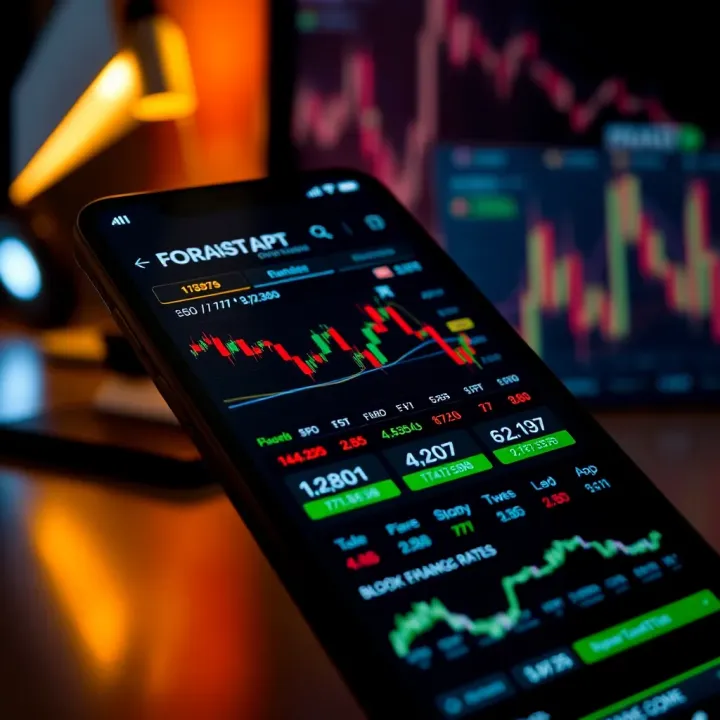
Understanding Forex Trading Apps in Kenya
Explore how forex trading apps work, their benefits and risks, and get expert tips to choose and trade wisely on mobile in Kenya! 📱💹🇰🇪
Edited By
Henry Dawson
Forex trading, often called currency trading, lets you buy and sell different currencies on an international market, aiming to make a profit from changes in exchange rates. For Kenyans, joining this market online has become easier thanks to increased internet access and mobile money platforms like M-Pesa.
Trading forex online means you don't have to be in a big financial centre like London or New York. Instead, using a laptop or even a smartphone, you can participate from your home in Nairobi, Kisumu, or any other county. This opens up opportunities but also means you must understand the basics to avoid unnecessary risks.
The forex market operates 24 hours during the weekdays, accommodating different global financial centres. This continuous availability suits Kenyan traders who might want to trade outside normal business hours. Key currency pairs include the US dollar against the Kenyan shilling (USD/KES), the euro, the British pound, and others.
Successful forex trading relies on a clear grasp of market factors affecting currencies — such as political events, economic data releases, and central bank policies — plus sound money management techniques tailored to your risk tolerance.
Before diving in, Kenyan traders should think about:
Choosing reliable brokers: Look for firms recognised by the Capital Markets Authority (CMA) or those accepting local payments like M-Pesa.
Getting familiar with trading platforms: Tools like MetaTrader 4 or cTrader provide charts and analysis to make informed decisions.
Understanding leverage: While leverage magnifies gains, it also increases potential losses. Kenyan traders must use it carefully, often starting small.
Risk management: Setting stop-loss orders and using a trading plan helps manage losses.
In this guide, you will find straightforward explanations and steps tailored for the Kenyan context. By mastering essential concepts and tools, you can trade forex online more confidently — keeping in mind the importance of continuous learning and practical experience.
Understanding forex trading online is essential for any Kenyan keen on entering this vast market. It involves exchanging one currency for another, offering an opportunity to profit from fluctuations in exchange rates. Given Kenya’s growing internet access and mobile money platforms like M-Pesa, online forex trading has become more accessible than ever before. This makes it convenient for traders to manage investments from Nairobi, Mombasa, or even smaller towns without attending a physical brokerage.
Forex trading, often called the foreign exchange market, is where currencies from around the world are bought and sold. Rather than trading physical goods or stocks, participants exchange currency pairs—for example, the US dollar against the euro (USD/EUR). This market helps businesses, travellers, investors, and governments convert currencies efficiently, and traders seek to benefit from price movements between these pairs. For instance, a Kenyan importer importing goods from China might need to convert KSh to Chinese Yuan, while a forex trader might speculate on the increase or decrease of that currency value.
In forex trading, currency pairs are grouped into major and minor pairs. Major pairs always include the US dollar because it is the world reserve currency, for example, USD/JPY (US dollar/Japanese yen) or USD/GBP (US dollar/British pound). Minor pairs do not involve the US dollar but might be pairs like EUR/GBP (euro/British pound) or AUD/NZD (Australian dollar/New Zealand dollar). Recognising these pairs helps Kenyan traders focus on pairs with higher liquidity and narrower spreads, which can reduce trading costs and improve trade execution.
Prices in the forex market move constantly due to supply and demand factors. Economic events such as interest rate decisions, political instability, or economic indicators like GDP growth affect the value of currencies. For example, if the Central Bank of Kenya raises interest rates, the Kenyan shilling might strengthen against other currencies, altering trading opportunities. Understanding these fluctuations allows traders to make more informed decisions rather than guessing blindly.
Online forex trading allows Kenyan traders to access the market anytime, anywhere, simply using a smartphone or computer. This flexibility means you can trade before work, during breaks, or after business hours without visiting a physical exchange or bank. Platforms often offer demo accounts where you can practise without risking real money—helpful for beginners.
Forex operates 24 hours a day from Monday to Friday, reflecting markets in Sydney, Tokyo, London, and New York opening and closing consecutively. This round-the-clock access means you can trade during Nairobi’s daytime or late at night. The high liquidity in major currency pairs ensures orders can be filled quickly without much price change, an advantage compared to some stock markets that have fixed hours and lower volume.
While forex trading offers profit chances, it also carries risk due to price volatility. Sudden shifts caused by global political events or unexpected economic data can cause prices to swing sharply. For Kenyan traders, this means it’s vital to manage risks carefully—using tools like stop-loss orders and not over-leveraging. Without proper risk management, the fast pace of online forex can lead to significant losses.
Getting started with a solid understanding of online forex trading helps you know what to expect, the opportunities available, and pitfalls to avoid. Always combine education with practice and take local market realities into account.
Choosing the right tools and platforms is a vital step for anyone diving into forex trading, especially Kenyan traders navigating the global markets. These resources make trading more accessible, provide essential information, and ensure smoother execution of trades. Understanding how to select reliable brokers and use robust platforms can save you time, reduce risks, and improve your trading results.
Selecting a forex broker licensed by Kenya’s Capital Markets Authority (CMA) is a key safeguard. CMA regulation assures you that the broker meets minimum operational standards, including transparency and fund protection. Without this, you risk dealing with unregulated firms that may disappear with your money or operate with unfair terms.
Licensed brokers in Kenya must adhere to rules on client fund segregation and submit regular reports to the CMA. This oversight increases your chances of smooth withdrawals and dispute resolution. So before opening an account, verify the broker's licence status on the CMA website or official lists.
Beyond licensing, it’s wise to check what other traders say about a broker. Look for detailed reviews that highlight withdrawal experiences, platform reliability, and customer service quality. Kenyan forums and social media groups often contain firsthand accounts worth considering.
Be cautious about brokers with many negative reviews about delays in payments or sudden account freezes. Reliable brokers tend to have consistent feedback over years, showing stable operations.
Forex brokers earn mainly from spreads (the difference between buy and sell prices) and sometimes from commissions. For Kenyan traders, these fees affect profitability directly. Lower spreads mean smaller costs on each trade, so brokers with tight spreads on popular pairs like USD/KES are often preferable.

Watch out for hidden fees such as withdrawal charges or inactivity penalties. Friendly brokers will clearly disclose all fees upfront. Comparing fee structures helps you pick a broker that suits your trading style—whether you trade frequently or hold positions longer.
MetaTrader 4 (MT4) and MetaTrader 5 (MT5) remain the most widely used forex trading platforms globally, including by Kenyan traders. MT4 is beginner-friendly and supports automated trading through Expert Advisors (EAs), while MT5 has more advanced charting tools and supports a wider range of assets.
Both platforms allow custom indicators and script creation, which is useful if you want tailored analysis or trading bots. They offer features like real-time quotes, multiple order types, and easy chart customisation.
With widespread smartphone use in Kenya, mobile trading apps are crucial. Most brokers offer apps that let you trade on the move, manage positions, and get alerts. For example, the MT4 and MT5 apps provide nearly all desktop features in a streamlined mobile interface.
Using mobile apps means you can react faster to market swings even when away from your computer. However, ensure your internet connection is stable to prevent execution delays.
An effective trading platform is more than just order execution; it connects you to market news and analysis tools. Many platforms integrate live newsfeeds from trusted agencies, economic calendars, and sentiment indicators.
Access to up-to-date financial news helps Kenyan traders understand what drives currency movements—like Central Bank of Kenya policy decisions or major international events. Analysis tools like Fibonacci retracements, moving averages, and RSI in the platform support better-informed trading decisions.
Selecting the right tools and platforms tailored to your needs and local context is half the battle in forex trading. Reliable brokers and capable software can make your trading experience safer, faster, and more profitable.
Understanding and applying effective trading strategies alongside robust risk management is key to success in the forex market. For Kenyan traders, the highly volatile nature of forex means that picking the right strategy and controlling risk can prevent losses and sustain profitability over time. By focusing on tried-and-tested methods and disciplined money management, traders can navigate challenges like sudden price swings and leverage pitfalls.
Day trading involves opening and closing positions within the same trading day to capture small price fluctuations. Scalping is a quicker form of day trading, targeting even smaller moves, often just a few pips, with trades lasting minutes or seconds. These strategies require fast decision-making and monitoring, suitable for traders who can dedicate time to watch the markets actively. For example, a Kenyan trader using MetaTrader 4 might scalp the EUR/USD pair during volatile London or New York sessions to cash in on sharp moves.
Swing trading focuses on holding positions over several days or weeks to benefit from medium-term trends. This approach fits traders who can't watch screens constantly but still want to capitalise on market swings. By analysing price patterns and economic news, a swing trader might buy USD/ZAR ahead of expected South African Reserve Bank interest rate changes, leveraging its medium-term trend. Swing trading smoothens out short-term noise and can suit part-time traders in Kenya juggling forex with other commitments.
Technical analysis studies price charts and indicators to forecast future movements. Kenyan traders might use tools like moving averages, Relative Strength Index (RSI), or Fibonacci retracements to identify entry points. On the other hand, fundamental analysis examines economic data, political events, and central bank policies. For instance, monitoring inflation figures from the Kenya National Bureau of Statistics or announcements from the Central Bank of Kenya (CBK) can inform trading decisions on the KES/USD pair. Combining both analyses helps build a fuller trading picture.
Stop-loss orders automatically close a trade at a predefined loss level, while take-profit orders lock in gains at a set price. These simple tools protect capital by limiting losses and ensuring profits are realised without emotional interference. For example, a trader buying GBP/USD could set a stop-loss 50 pips below the entry to prevent a large loss if the market reverses, and a take-profit 100 pips above to secure a reasonable gain without waiting too long.
Determining the right amount to invest in each trade—position sizing—is critical to risk control. Combined with cautious use of leverage, it prevents blowing accounts quickly. In Kenya, where some brokers offer leverage of up to 1:100, even a small error in sizing can magnify losses. A rule of thumb is risking no more than 1–2% of the trading capital per trade. So, if you have KSh 100,000, a single trade's risk should not exceed KSh 1,000 to 2,000, according to your strategy.
Emotions like fear and greed often push traders into irrational decisions or excessive trading, which drains resources. Developing self-discipline prevents chasing losses or entering trades out of boredom. A practical tip is maintaining a trading journal to record emotions alongside performance, helping spot patterns of overtrading or impulsive moves. Kenyan traders balancing forex with other jobs benefit from clear rules and limits to keep emotions in check and trades purposeful.
Risk management is not optional in forex but essential for long-term survival. Employing sensible strategies with firm controls over losses will help keep your forex journey sustainable and profitable.
Trading forex in Kenya comes with unique factors that every trader should understand. These local considerations shape how you choose brokers, fund your account, and handle legal aspects. Understanding these elements helps you avoid costly mistakes and makes the trading experience smoother.
The Capital Markets Authority (CMA) governs most financial markets in Kenya, including forex trading. While forex trading itself is not banned, brokers operating in Kenya must be licensed by the CMA. This oversight protects traders from unscrupulous operators and helps keep the market transparent. When selecting a broker, check if they appear on the CMA’s official list of licensed entities to ensure your money is safe.
Forex trading in Kenya is legal as long as it involves brokers regulated by the CMA or recognised international brokers who comply with Kenyan laws. The regulatory framework ensures platforms adhere to transparent business practices. However, unregulated brokerage services or schemes claiming high, guaranteed returns often fall outside the law and can lead to losses or legal trouble. Always confirm the broker’s compliance before depositing funds.
Forex scams target inexperienced traders through fake platforms or aggressive marketing promises. To protect yourself, avoid brokers without a valid CMA licence, unsolicited trading advice via WhatsApp or social media, and offers that sound too good to be true. Also, never share your account details or PINs with anyone. Vet the broker’s reputation by searching for reviews and feedback from other Kenyan traders.
Staying informed about regulations and legalities is your first line of defence against fraud and losses.
M-Pesa is by far the most popular method for depositing money into forex trading accounts in Kenya. Many brokers accept M-Pesa due to its broad reach and ease of use. Bank transfers are also an option but tend to be slower and might incur additional charges. When funding your account, confirm the broker supports these payment methods and understand any minimum deposit limits or fees involved.
Most forex trading accounts operate in US dollars or euros, so currency conversion comes into play when you deposit Kenyan Shillings (KSh). This process often incurs conversion fees, which can eat into your trading capital. Some brokers offer accounts in Kenyan Shillings to avoid constant conversion, reducing costs. Always compare fees and consider how transaction charges affect your overall trading expenses.
Withdrawing money should be straightforward and secure. Confirm the broker’s withdrawal process—some take several business days, while others are quicker. Many Kenyan traders prefer to receive profits via M-Pesa for convenience, but bank transfers are common too. Avoid brokers that delay withdrawals without clear reasons or impose unexpected fees. Keeping clear records of transactions is good practice to resolve any disputes.
Navigating forex trading in Kenya involves understanding the local rules and payment choices. Being aware of the regulatory environment, legal standing, and how to handle funds can make all the difference in your trading journey.
Starting forex trading can seem daunting, but breaking down the process into clear, practical steps helps Kenyan traders build confidence and avoid common pitfalls. This section outlines what you need to get going, from opening your account to crafting a solid trading plan. Each step ensures you trade with purpose and protection, especially within Kenya’s specific context.
Forex brokers usually offer several account types to suit different traders. The most common are standard accounts, mini accounts, and sometimes micro or managed accounts. For example, a mini account requires a smaller deposit, say KSh 10,000, making it ideal for beginners testing the waters without risking too much. Meanwhile, a standard account suits more experienced traders ready to trade larger volumes and access more features.
Choosing the right account goes beyond deposit size. Check whether the account offers fixed or variable spreads, leverage options, and if it allows trading popular currency pairs that Kenyans often focus on, like USD/KES or EUR/USD. Picking an account that fits your budget and trading style helps avoid unnecessary fees and surprises later.
Before you can trade with real money, forex brokers need proof of your identity and residence. This is part of Know Your Customer (KYC) rules to prevent fraud. In Kenya, brokers typically ask for a national ID or passport and a recent utility bill or bank statement with your address. The process usually takes a few days but can be quicker if all documents are clear and valid.
Verifying your account early saves headaches when you want to fund your account or withdraw profits. For instance, if your documents are not accepted, your payments might be delayed or blocked. So, it’s wise to prepare scanned copies and check the broker’s instructions carefully.
Most brokers offer demo accounts that simulate live trading without risking real money. This is especially useful for Kenyans new to forex trading or anyone trying a new strategy. A demo account lets you experiment with trading platforms like MetaTrader 4 or 5, understand how orders work, and test the effects of leverage.
Using a demo keeps you sharp and reduces costly mistakes at the start. Think of it as training in a safe environment before stepping into the real ring.
A trading plan anchors your decisions on clear goals and how much risk you can handle. For instance, if you aim to make a monthly supplementary income of KSh 5,000 from a starting capital of KSh 50,000, your plan will guide how aggressively to trade. Knowing your risk tolerance helps avoid emotional decisions, like chasing loss or over-investing in a single trade.
Without a defined plan, it’s easy to get swept up in market hype or social media tips which might not suit your situation. Clear goals keep you focused and more accountable.
Recording every trade, including the reasons for entering or exiting, market conditions, and outcomes, builds valuable experience over time. For Kenyan traders, a journal can highlight patterns such as how you perform during major events, like US Federal Reserve announcements or local holidays that affect liquidity.
A trading journal also helps you spot recurring mistakes or successful strategies, making continuous improvement systematic rather than guesswork.
The forex market changes constantly due to economic, political, and global factors. To keep up, Kenyan traders should commit to regular learning—whether through reading market analysis on Nairobi Securities Exchange updates, following trusted forex educators, or attending workshops.
Besides gaining knowledge, reviewing your past trades and adapting your strategies keeps you sharp. Forex trading isn't a one-off skill; it’s a craft that benefits from steady practice and adjustment.
Starting your forex journey with a clear process—from setting up your account properly to planning every trade—lays a foundation that helps protect your money and grow your skills gradually.
This practical approach is key to navigating the Kenyan forex landscape confidently.
Explore how forex trading apps work, their benefits and risks, and get expert tips to choose and trade wisely on mobile in Kenya! 📱💹🇰🇪

📚 Discover must-read books on forex trading in Kenya! Learn strategies, risk management & market insights to boost your trading skills and confidence. 💹
Discover practical forex trading strategies tailored for Kenyan traders 🇰🇪. Learn key principles, analysis, risk management, and mindset tips for success 📈💡
🔍 Discover how Kenyan forex traders can pick the perfect trading platform by comparing security, fees, usability, and features tailored to your needs.
Based on 13 reviews