
How Forex Trading Works in Kenya
Learn how forex trading works in Kenya 🇰🇪 covering local regulations, reliable platforms, risk management, and practical tips to trade safely using KSh and M-Pesa.
Edited By
James Thornton
Forex trading, short for foreign exchange trading, involves buying and selling different currencies to make a profit from the changes in exchange rates. Unlike stock markets, which deal with shares, the forex market handles currencies such as the US dollar, Euro, Kenyan shilling, and others. This market operates 24 hours every weekday, thanks to the global nature of currency trading.
To grasp how forex trading works, it helps to understand that currencies are traded in pairs. For example, the pair USD/KES shows how many Kenyan shillings you need to buy one US dollar. When you expect a currency in a pair to strengthen, you buy it; if you expect it to weaken, you can sell it.
The forex market is the largest financial market globally, with daily traded volumes exceeding $6 trillion. Its liquidity and round-the-clock accessibility attract traders from all over the world.
The forex market consists of several key players:
Banks and financial institutions: These are responsible for the majority of forex transactions and provide liquidity.
Individual traders and investors: Kenyans who trade via brokers using online platforms.
Corporates: Companies engaging in forex to pay for imports or repatriate profits.
Central banks: These regulate and influence exchange rates through monetary policy.
Currency prices are affected by various factors:
Economic data like GDP growth or inflation.
Political stability and events.
Interest rate decisions by central banks, for example, the Central Bank of Kenya.
Market sentiment and speculations.
Forex trading happens electronically over-the-counter (OTC), meaning there is no central exchange, but a network of dealers and brokers. Kenyan traders commonly use brokers regulated by the Capital Markets Authority (CMA) who offer platforms where you can trade currency pairs.
Leverage is often used in forex trading – allowing traders to control large positions with a small amount of money. While leverage can magnify profits, it can equally lead to significant losses if the market moves against the trader.
Understanding these basics sets a practical foundation to explore more detailed aspects of forex trading, from technical analysis to risk management strategies.
Grasping the dynamics of the forex market is key before jumping into trading. Forex trading is not just about buying and selling currencies; it involves understanding the forces that move currency rates, who trades currencies, and how trade flows influence global economics. For example, a trader in Nairobi might watch how the US dollar fares against the Kenyan shilling, especially after major announcements like Kenya’s GDP growth figures or Fed interest rate decisions.
Forex trading means exchanging one currency for another in the hope of profiting from price changes. Unlike other markets, forex runs 24 hours a day, five days a week, reflecting trading activities globally. This continuous operation allows traders flexibility but demands awareness of different market sessions—from Tokyo and London to New York. Trading essentially revolves around currency pairs, like EUR/USD or USD/KES, where you buy one currency and sell the other simultaneously.
Central banks and governments are major players in the forex market. They intervene to stabilise or boost their economies by influencing their currencies. For instance, the Central Bank of Kenya (CBK) occasionally buys or sells the shilling to manage its exchange rate, especially during volatile periods affecting imports or inflation. Such interventions affect forex prices directly, making it wise for traders to monitor central bank policies and monetary decisions.
Commercial banks and financial institutions facilitate most forex transactions. They trade large volumes on behalf of clients or for their portfolios. When a Kenyan bank like Equity or KCB converts large sums of dollars to shillings for corporate clients importing goods, they contribute to supply and demand that moves exchange rates. These entities also provide liquidity, ensuring that currency transactions happen smoothly with tight spreads.
Retail traders, including individual investors and small firms, participate through brokers that provide access to the forex market. These brokers, such as HotForex or AvaTrade, offer platforms where retail traders can buy and sell currencies with smaller capital compared to big banks. Their presence has grown in Kenya due to improved internet access and mobile technology, bringing forex trading within reach of the everyday person. However, retail traders must understand risks and use proper strategies, as the market can be unpredictable.
Understanding who trades forex and how they operate helps you see beyond charts and prices. It connects market movements to real economic activities and policy decisions, equipping you with a more informed approach to trading.
Forex trading always happens in pairs; you don't buy or sell a single currency but trade one against another. These pairs are essential because they tell you which currencies you're exchanging — one currency is bought, and the other sold simultaneously. Understanding currency pairs is the backbone of making sense of forex prices and movements.
Every currency pair has two parts: the base currency and the quote currency. The base currency is the first currency listed and acts as the reference point. The quote currency, coming second, shows how much of it you need to buy one unit of the base currency.
For example, in the pair USD/KES (US dollar/Kenyan shilling), USD is the base and KES the quote. If the price is 110 KSh, it means you need 110 Kenyan shillings to buy one US dollar. When you buy this pair, you're buying dollars and selling Kenyan shillings; when you sell, you sell dollars and buy shillings.
Currency pairs are generally grouped as majors, minors, or exotic pairs, depending on their liquidity and popularity. Majors always include the US dollar because it's the most traded currency globally.
The top majors include EUR/USD (euro/dollar), USD/JPY (dollar/Japanese yen), and GBP/USD (British pound/dollar). These pairs have tight spreads due to high trading volume, making them cost-effective and less volatile.
Minors don't involve the US dollar but pair other major currencies like EUR/GBP (euro/British pound) or AUD/NZD (Australian dollar/New Zealand dollar). These tend to have wider spreads and can be more volatile.
For Kenyan traders, understanding which pairs to focus on helps in picking those with better liquidity and predictable price action. For instance, USD/KES is actively traded locally, offering more stable moves compared to less common pairs.
Pip stands for "percentage in point" and is the smallest price change an exchange rate can make. In most currency pairs, a pip is 0.0001 of the quoted price, like a hundredth of a cent in USD pairs.
Tracking pip movements lets traders measure gains or losses clearly. For example, if USD/CHF moves from 0.9120 to 0.9130, it has moved 10 pips.
Some pairs involving the Japanese yen quote prices differently; their pip is 0.01 instead of 0.0001 because of the yen's smaller unit value.
Understanding pips is key to managing your trades. Knowing how many pips your position moves helps calculate profits or losses accurately.
Knowing the dynamics of currency pairs, from base and quote to pip value and pair types, helps traders make informed decisions. This knowledge shapes strategies, grooming you to read the market like a pro rather than guesswork.
Trading mechanics and execution form the backbone of how forex trading actually happens. It’s not just about guessing currency moves but understanding the practical way you buy and sell currencies through different platforms. Knowing how trades are placed, the role brokers play, and the types of orders you can use helps traders react faster and manage risks better.
A forex trade starts when you decide to buy or sell a currency pair through a trading platform, often provided by a broker. For example, if you believe the US dollar will strengthen against the euro, you buy the USD/EUR pair. The trade ends when you close the position, either by selling the same amount you bought or buying back what you sold. Closing the trade locks in your profit or loss. Trades can be open for seconds, minutes, or days depending on your strategy.
Forex brokers act as the middlemen connecting you to the vast forex market, which doesn’t have a central exchange like stock markets. They provide the platforms and tools needed to place orders and monitor trades. Brokers charge through spreads—the difference between buy and sell prices—or commissions. Choosing a reliable broker is key. A broker like IG or FXTM, for instance, offers transparent pricing and localised support, which benefits Kenyan traders looking to operate efficiently.
Market orders let you buy or sell a currency pair immediately at the current market price. This is useful when you want to enter or exit a trade quickly—say if news about a change in interest rates just dropped. However, since price can fluctuate in seconds, the executed price might be slightly different from what you saw.
Limit orders are set to buy or sell at a specific price or better. For instance, if the EUR/USD pair is at 1.1000 but you want to buy only if it drops to 1.0950, you set a buy limit order at 1.0950. Stop orders work similarly but activate trades once the price hits a particular level going against your current position. These are handy for entering the market more strategically or protecting yourself from big moves.
Take profit orders close a trade automatically once your target gain is reached, securing profits without needing constant monitoring. On the flip side, stop loss orders limit your loss by closing the trade if the market moves unfavourably, protecting your capital. Both are essential risk management tools, especially in the fast-moving forex market.
Understanding trading mechanics and order types not only gives you control over your trades but also helps manage risks effectively, which is especially important in volatile markets like forex.
Leverage and margin are two of the most important concepts in forex trading. They determine how much money you need to open a position and how much exposure you can have in the market. Getting familiar with them can help you trade more effectively, especially when starting with limited capital.
Leverage allows traders to control a larger position than the actual amount of money in their trading account. Think of it as a loan offered by your broker. For example, if a broker provides 100:1 leverage, you can control KSh 100,000 with just KSh 1,000 in your account. This means small price movements can lead to significant profits but also bigger losses.
To make this concrete, imagine you spot a trading opportunity with the US dollar against the Kenyan shilling. If you use 50:1 leverage, you need just KSh 2,000 to control a KSh 100,000 position. This boosts potential earnings but demands caution.
Margin is the actual money you need to put down from your account to open a leveraged trade. Using the example above, if you want to trade KSh 100,000 with 50:1 leverage, your margin requirement will be KSh 2,000 (which is 1/50th of the position size). This margin remains reserved in your account until you close the trade.
Different brokers have varying margin requirements based on the currency pair and the leverage offered. It’s important to monitor your margin because if the market moves against you and your account balance falls below the required margin, you might face a margin call from your broker to add more funds or close positions.
While leverage can boost profits, it equally increases the risk of significant losses. Many new traders get caught out by high leverage, treating it like free money, which leads to quick depletion of their accounts.
Using leverage without proper risk management is like driving a speeding vehicle without brakes — it can end badly.
High leverage can amplify even small market fluctuations into huge losses. For instance, if your trade moves against you by just 2% on a 100:1 leverage, this translates to a full 200% loss on your invested margin. This means you can lose more than your initial deposit if your broker does not have proper safeguards.
To manage these risks, experienced traders use stop-loss orders and only utilise leverage levels they can comfortably handle. Always consider the volatility of the currency pair and your own risk tolerance before deciding on leverage.
Understanding the balance between leverage and margin helps you navigate forex trading more responsibly, avoiding costly mistakes while maximising your potential gains.
Understanding the factors that influence forex prices is vital for traders aiming to predict currency movements accurately. Exchange rates react to various economic data and global events, so keeping an eye on these drivers helps you make informed decisions. In Kenya, where the shilling’s value can be affected by both local and international developments, recognising these influences is key to managing risk and capitalising on opportunities.
Interest rates are among the most important economic indicators affecting forex prices. Central banks like the Central Bank of Kenya (CBK) set benchmark rates that influence currency strength. When interest rates rise, higher returns attract foreign investment, pushing the local currency's value up. For instance, if the CBK increases rates to fight inflation, the Kenyan shilling may strengthen, since investors seek better yields.
Conversely, lower interest rates usually reduce demand for a currency, causing depreciation. Traders monitor rate decisions closely because they signal economic health and affect capital flows. Knowing when changes are expected can give you an edge in timing trades.
Inflation measures how fast prices rise, affecting purchasing power and currency desirability. Moderate inflation is normal, but high inflation erodes currency value, prompting central banks to adjust monetary policies. For example, if Kenya experiences rising inflation without corresponding interest rate hikes, the shilling may weaken as confidence drops.
Forex traders watch inflation reports to anticipate central bank responses. Unexpected inflation shifts can trigger swift market moves. Keeping an eye on inflation trends helps you assess the currency’s real value and avoid surprises.
Employment numbers reflect economic vitality and are closely watched worldwide. In Kenya, statistics from the Kenya National Bureau of Statistics (KNBS) give insights into labour market health. Strong employment growth signals a robust economy, which tends to support a stronger currency due to increased consumer spending and investor confidence.
Poor employment figures, on the other hand, may hint at economic troubles, weakening the currency. Traders use employment reports alongside other economic indicators to build a clearer picture of future price movements.
Political developments can cause sharp currency swings, especially in a country like Kenya where national elections, policy changes, or unrest affect investor confidence. Market sentiment—how traders collectively feel—often drives forex prices temporarily, sometimes overriding fundamentals.
For instance, the period leading up to Kenya’s general elections often sees increased volatility as uncertainty rises. Even rumours or social media chatter can impact sentiment, nudging prices one way or another. Understanding these shifts can help traders decide when to enter or exit positions.
Successful forex trading involves monitoring both hard data like economic indicators and softer factors such as political climate and market mood. This combined approach improves your chances of navigating the market effectively.
By keeping tabs on these key factors, traders and investors can better anticipate exchange rate movements and manage their positions to either protect gains or limit losses.
Understanding and managing risks in forex trading is essential for anyone serious about staying in the market for the long haul. The forex market can be highly volatile, with prices swinging on economic news or sudden political events. Without proper risk management, even a well-informed position can turn sour quickly, wiping out hard-earned profits or capital.
Risk management strategies help traders protect their investments and keep losses manageable. One practical approach is setting limits on how much of your trading capital to risk on a single trade—many experienced traders suggest risking no more than 1-2% per trade. For instance, if you have KSh 100,000 in your trading account, you might set a stop loss that ensures you won’t lose more than KS,000 or KS,000 in that trade. This way, even a string of losing trades won’t decimate your capital, giving you room to recover.
Beyond just protecting money, risk management also guides decision-making. It encourages discipline to stick to your trading plan and avoid chasing losses. Without such discipline, many traders fall prey to emotional decisions, which often lead to bigger losses.
Stop loss and take profit orders are the bread and butter of risk control in forex trading. A stop loss automatically closes your position when the price moves against you by a predefined amount, limiting your loss. On the other hand, a take profit order locks in gains by closing your position once the price reaches a favourable level.
For example, if you buy the USD/KES pair at 110 and set a stop loss at 108, your position will close if the price dips to 108, protecting you from larger losses. Setting a take profit at 115 would lock in profit when the pair hits that level. These tools take the emotion out of trading by automating exits, preventing you from holding losing positions too long or closing winners too soon.
Many traders get into trouble by ignoring risk management basics. Chasing the market, over-leveraging, or failing to use stop losses often leads to steep losses. For instance, using high leverage without a clear exit plan might amplify losses faster than anticipated. Another mistake is overtrading—placing too many trades on little capital. This spreads focus thin and increases exposure to market fluctuations.
Also, some traders let their emotions drive decisions, like holding onto a losing trade hoping the market will turn. This "hope trading" can deplete your capital fast. Instead, learn to accept small losses and stick to your risk strategy.
Effective risk management is not about avoiding losses altogether but controlling them so you stay in the game longer and grow steadily. It’s about balancing potential rewards with the risks, using practical tools like stop losses and disciplined strategies to protect your hard-earned money.
By focusing on managing risks carefully, you improve your chances of lasting in the forex market. Remember, consistent profits come from protecting your capital first, then seeking opportunities. It’s the foundation every Kenyan trader must build on, whether trading from Nairobi or Kisumu.
Learn how forex trading works in Kenya 🇰🇪 covering local regulations, reliable platforms, risk management, and practical tips to trade safely using KSh and M-Pesa.
💱 Learn how forex trading works, including currency pairs, leverage, and key players. Understand risks and rewards for Kenyan traders seeking profit in global markets.
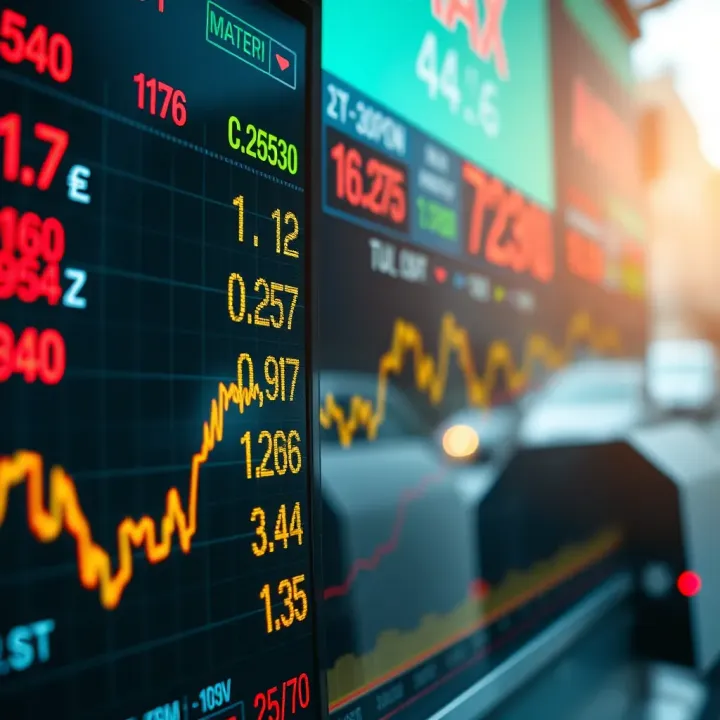
🌍 Learn how forex trading works, understand currency price drivers, discover key strategies, risks, and tips for participating confidently in global currency markets.

📈 Discover how forex trading works in Kenya, from currency pairs to leverage and risk management. Learn about platforms, market players, and practical tips to trade smartly.
Based on 5 reviews