

Start Forex Trading in Kenya: A Beginner's Guide
Learn how to start forex trading in Kenya 🇰🇪 with clear steps on setting up, managing risk, and gaining confidence to trade responsibly for steady returns 📈
Edited By
Charlotte Edwards
Diving into forex trading in Kenya means you’re stepping into a fast-moving market where currencies from around the world are bought and sold daily. Whether you’re an experienced investor or just exploring, getting started involves a few clear steps. Understanding how the market works, picking a trustworthy broker, and developing smart trading strategies will save you time and protect your money.
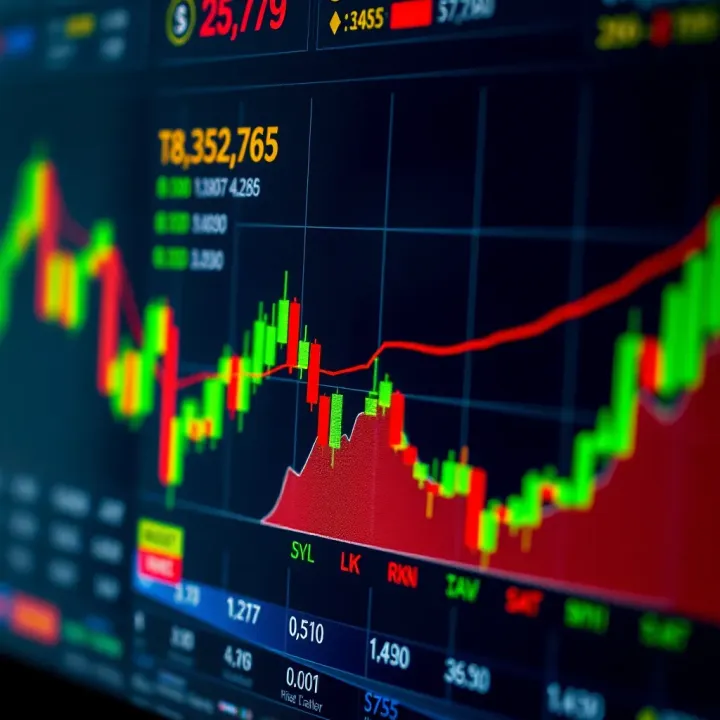
Forex trading allows you to operate 24 hours a day across global markets. For Kenyan traders, this means you can trade during your free hours, not being confined to local stock market times. The liquidity in forex markets is huge, so entering and exiting trades is fast. On top of that, leverage options enable you to control larger positions than your initial deposit, though this comes with high risks.
Starting with a solid grasp of forex concepts is key. Know what currency pairs are, how exchange rates move, the impact of economic news from key players like the US Federal Reserve or the European Central Bank, and how to read price charts. For instance, the USD/KES pair where the US dollar trades against the Kenyan shilling is popular locally and affected by regional trade, inflation, and political events.
Tip: Take advantage of free demo accounts offered by brokers. These let you practise trading with no real money, understanding market behaviour and testing strategies without risk.
Your broker is the gateway to forex markets, so pick carefully. Look for brokers regulated by respected authorities like the Capital Markets Authority of Kenya or international bodies such as the Financial Conduct Authority (FCA) in the UK. Kenyan traders should also check if the broker supports local payment options like M-Pesa to deposit and withdraw funds easily.
Competitive spreads and reasonable commissions
User-friendly trading platforms (MetaTrader 4/5 are common)
Responsive customer support with local language options
Educational resources for learning and strategy building
Forex markets can move quickly and unpredictably. Use small trade sizes initially and always apply stop-loss orders to protect your capital. Risk management is not just about avoiding losses but also about keeping your emotions in check.
By starting with a good foundation and realistic expectations, you’ll be better placed to navigate forex trading in Kenya and make decisions that build your trading confidence steadily.
Forex trading means buying one currency while selling another at the same time, aiming to make a profit from the changes in exchange rates. Unlike stock markets, forex trades currency pairs—these show the value of one currency against another. For example, the USD/KES pair tells you how many Kenyan shillings it takes to buy one US dollar. This kind of trading lets you make money whether the shilling strengthens or weakens, depending on your position.
To succeed in forex, it’s key to grasp how currency pairs work. The first currency in a pair is called the base currency, while the second is the quote currency. If USD/KES is trading at 110, one US dollar buys 110 Kenyan shillings. If you expect the shilling to weaken, you might buy USD/KES, hoping to sell later at a higher price for a profit. On the other hand, if you predict the shilling will strengthen, you’d sell the pair. Getting this right involves understanding global economic events, interest rates, and other factors that influence currencies.
Forex is a 24-hour market running through various international sessions, so knowing market hours helps traders catch the best opportunities. The forex day starts in Asia, moves to Europe, then ends in America. This cycle means there’s always a busy market somewhere, offering chances to trade at all hours.
For Kenyan traders, the London and New York sessions tend to be most active. These coincide with the afternoon and evening hours in Kenya, which is when currency pairs involving the US dollar and Euro often experience more significant price movements. Trading during these overlapping hours can offer better liquidity and tighter spreads, making it easier to enter and exit trades efficiently.
Understanding these basics clientally allows you to plan when to trade and how to pick currency pairs likely to rise or fall. It’s not about guessing but analysing movements within these time frames.
To put it plainly, if you start trading when the market is quiet, you might face wider price spreads and risk slippage. But if you trade during active hours—for example, London session starting 10 am EAT (East Africa Time)—you get sharper prices and more predictable moves.
This knowledge forms the foundation before diving into broker choice, trading strategies, or risk management. It sets you up to make wise decisions from the start, helping avoid rookie mistakes like chasing the market at odd hours or misunderstanding what a currency pair truly means.
Starting forex trading without preparation is like stepping into a busy matatu stage without knowing the routes or fare. It’s essential to equip yourself with the right knowledge before putting money into the market. This phase shapes your trading behaviour, reduces costly mistakes, and ultimately boosts your chances of consistent success.
To navigate forex trading confidently, you first need to familiarise yourself with key terms like ‘pip’, ‘spread’, ‘lot size’, and ‘leverage’. For example, a pip is the smallest price change in currency pairs and tracking pips helps you measure profit or loss. Without these basics, you risk misreading information and making poor decisions.
Knowing terms like ‘bid’ and ‘ask’ prices is practical when you want to enter or exit trades. If a broker shows a bid price of 110.20 for USD/JPY, and you want to sell, you’d use that price. This knowledge directly influences how and when you trade.
Understanding charts is crucial because forex trading depends largely on visualising price action. Most beginners find candlestick charts helpful since they reveal open, close, high, and low prices within a given time.
For instance, recognising patterns like ‘double tops’ or ‘head and shoulders’ can signal potential market reversals. This helps you make informed entry and exit decisions instead of guessing. Additionally, spotting trends—whether a currency is generally moving up or down—can guide your strategy.
Volatility means how much a currency’s price moves within a period. Forex markets can swing quickly due to events like economic reports or geopolitical changes. For example, if the Kenya Shilling suddenly weakens due to political uncertainty, forex pairs involving the KSh can display sharp price moves.

High volatility can offer more profit chances, but the risk of losses rises too. You need to understand volatility to choose appropriate trade sizes and avoid overexposure. Ignoring this can leave you stranded by sudden market shifts.
Leverage lets you control a larger position with a small amount of your own money. For example, with 1:100 leverage, a KSh 10,000 deposit can control KSh 1,000,000 worth of currency. This boosts profit potential but also amplifies losses.
If a trade goes against you by 1%, you lose that percentage of the total leveraged amount, not just your deposit. Many new traders fall into the trap of over-leveraging and losing their capital fast. Wise use of leverage means understanding its power and setting limits on trade sizes.
Preparing well before trading helps you trade responsibly, protect your capital, and grow steadily. Avoid rushing in without understanding these basic but important foundations.
By focusing on essential terms, chart reading, volatility, and leverage, you build a solid base to join Kenya’s forex trading market confidently.
Selecting a trustworthy forex broker is a key step when starting forex trading in Kenya. Your broker acts as the middleman between you and the market, so choosing one with solid regulation, competitive costs, and a reliable platform can make or break your trading experience.
Kenya’s Capital Markets Authority (CMA) regulates forex brokers operating within the country to protect traders from fraud and malpractice. Working with a CMA-licensed broker means they adhere to local laws, maintain minimum capital requirements, and follow rules designed to keep client funds safe. For example, CMA-regulated brokers often segregate client funds from their own business accounts, helping protect your money if the broker runs into trouble.
Using a broker approved by CMA Kenya reduces risk and gives you legal grounds for complaint if things go wrong.
To verify a broker’s legitimacy, visit the official CMA website where they publish an updated list of authorised brokers. Also, check customer reviews and forums for traders’ experiences. Beware of brokers promising guaranteed profits or extremely high returns with low risk—these are often red flags. A genuine broker will have clear terms and transparent operations.
Traders in Kenya commonly use platforms like MetaTrader 4 (MT4), MetaTrader 5 (MT5), and cTrader. These platforms offer real-time charting, technical indicators, and automated trading options. A good platform should be user-friendly, support mobile and desktop trading, and have quick execution speeds. For instance, MT4 is popular for its simplicity and widespread broker support, while MT5 offers more tools and asset types.
Costs such as spreads, commissions, and swap fees affect your overall profitability. Spreads are the difference between buy and sell prices; lower spreads reduce trading costs. Commission fees vary—some brokers charge per trade, others bundle costs into spreads. Always review fee schedules before choosing a broker. For example, some brokers offer zero commissions but wider spreads, so compare based on your trading style. Also, consider deposit and withdrawal fees, especially for payments by M-Pesa or local bank transfers.
By carefully evaluating regulation, platform features, and fees, you can pick a broker that’s safe, affordable, and well suited to your trading needs in Kenya.
Opening and funding your trading account mark the first real step from learning about forex trading to putting real money on the line. This stage is vital because it sets the foundation for your trading journey, affecting your experience, potential profits, and risks. Knowing how to choose the right account type and managing funds properly will save you from common mistakes like overtrading or dealing with unexpected fees.
When starting out, you will encounter different account types offered by brokers. The two main ones are standard accounts and mini accounts. Standard accounts require larger initial deposits, usually from KS0,000 upwards, and allow trading in full lot sizes. This suits more experienced traders who have sufficient capital and prefer bigger trades. On the other hand, mini accounts are designed for beginners or those with smaller budgets, often starting with deposits as low as KS,000. Mini accounts let you trade smaller lot sizes, reducing exposure and making it easier to learn without risking too much money.
Besides these, demo accounts provide a risk-free way to practice. They simulate the forex market with virtual funds, allowing you to try different strategies and get familiar with the trading platform before committing real money. For Kenyans new to forex, using a demo account for several weeks is a smart move. This helps avoid losing money early due to mistakes while building confidence and skills in a controlled environment.
Depositing funds into your trading account should be quick, safe, and hassle-free. In Kenya, most forex brokers accept M-Pesa, the popular mobile money service, as well as direct bank transfers. To fund your account using M-Pesa, you'll generally follow these steps:
Log into your broker’s website or trading app.
Select deposit and choose M-Pesa as the payment method.
Enter the amount you want to deposit.
Follow the prompts to complete the payment through your M-Pesa Paybill or Till Number.
Using M-Pesa is convenient since many Kenyans already have it on their phones, and transactions are fast with low charges. Alternatively, bank transfers offer a more traditional route. You may need to initiate the transfer through your bank’s mobile app or visit the branch. This method is usually preferred for larger deposits.
Regarding minimum deposit requirements, these vary among brokers. Some allow you to start with as little as KS,000, which is great for cautious beginners. Others may insist on KS0,000 or more to open a live trading account. Always check the broker's terms before signing up to ensure the minimum deposit fits your trading budget.
Opening and funding your forex account wisely is key to controlling your risks and setting a smooth path in forex trading. Choose the right account type and payment method to match your trading plan and financial situation.
By understanding account types and payment options, you lay the groundwork for a trading experience that balances learning with practical money management.
Having a clear trading plan is essential for any forex trader in Kenya. It acts like a roadmap, guiding your decisions and keeping emotional impulses in check. Without a plan, it’s easy to make hasty moves based on market hype or fear, which often leads to losses.
Your trading strategy—not a guesswork routine but a well-thought-out method—helps you decide when to enter or exit trades, how much to risk, and which currency pairs to focus on. For instance, some traders prefer short-term trades during the London or New York session, while others take a longer view based on weekly price trends. Getting these basics right boosts your chances of steady profits.
Defining your trading objectives means knowing what you want to achieve. Are you trading to top-up your income, save for a goal, or build long-term wealth? Your goals shape how you approach the market. For example, aiming for quick daily gains means you’ll be watching charts closely, while slow portfolio growth means you’re less concerned with short-term ups and downs.
Time commitment and expectations go hand-in-hand with your goals. Forex trading isn’t a get-rich-quick scheme; it demands time to learn, monitor markets, and evaluate trades. If you work full-time, you might stick to trading during evenings or weekends. Clarifying your available time helps you pick strategies that fit your schedule, avoiding burnout or rushed decisions.
Technical analysis basics focus on studying past price movements through charts and indicators. Using tools like moving averages, support and resistance levels, or candlestick patterns helps you predict future price action. For instance, a trader in Nairobi might look for price breakouts during active market hours as an entry signal. This approach suits those who trust market patterns more than company news.
Fundamental analysis considerations involve tracking economic data and geopolitical events that influence currency values. In Kenya, this could mean following CBK's monetary policies, inflation reports, or major trade agreements in the East African region. For example, a sudden interest rate cut by the US Federal Reserve can cause the USD to weaken, affecting USD/KES pairs. Combining fundamentals with technical signals gives a fuller market picture.
Stop-loss and take-profit orders are tools to protect your capital and lock in gains automatically. Setting a stop-loss order means your trade closes if the price moves against you by a predetermined amount, limiting your loss. Similarly, a take-profit order secures profit once your target price hits. For example, if you buy EUR/USD at 1.1000, setting a stop-loss at 1.0950 caps your loss to 50 pips, while a take-profit at 1.1100 locks in potential gains of 100 pips.
Effective use of stop-loss and take-profit orders saves you from emotional decision-making when the market becomes unpredictable.
Controlling position sizes involves deciding how much money to risk on each trade relative to your total trading capital. A common rule is risking no more than 1–2% of your account balance per trade. For instance, if your trading account has KSh 100,000, risk no more than KSh 1,000-KSh 2,000 on a single trade. This prevents heavy losses that can quickly wipe out your funds and keeps you in the game longer.
Developing a solid plan around these core elements puts you on a firmer footing in forex trading. Combine clear goals, chosen strategies, and disciplined risk control to build trading habits that can weather Kenyan market conditions and global shifts alike.
Successfully entering forex trading hinges on your ability to place trades correctly and keep a close eye on market movements. This section focuses on practical steps to execute trades and monitor ongoing fluctuations, enabling you to respond swiftly to market changes and protect your investments.
Most brokers in Kenya offer trading platforms like MetaTrader 4 (MT4) or MetaTrader 5 (MT5), which are popular for their user-friendly interfaces and useful tools. Knowing how to navigate these platforms matters a lot—you can open and close trades, check real-time price charts, and use indicators all in one place. For example, if you notice the USD/KES pair trending upwards, you can quickly place a buy order to ride the momentum. Familiarising yourself with shortcut keys, chart customisation, and account dashboards helps reduce errors and speeds up your trading.
Forex trading involves different order types to control precisely when and how trades are executed. The main ones include:
Market orders: These execute immediately at the current market price. If you expect a fresh economic report to push the euro higher against the shilling, you might place a market buy order to join the move without delay.
Pending orders: These let you set a price level in advance, so the trade opens only when that price is reached. For example, placing a ‘buy limit’ below the current price anticipates a dip before the market rises again. This can shield you from entering at a costlier level.
Understanding and using the right order type lets you manage risks and seize timely opportunities precisely.
Staying informed is key. Trusted news outlets like Reuters, Bloomberg, and the Kenya National Bureau of Statistics provide data that influence currency movements. Local business news platforms also help track changes affecting the shilling. Using a mix of global and Kenyan sources will keep you updated on all relevant developments.
Economic announcements such as Central Bank of Kenya (CBK) interest rate decisions, inflation reports, or unemployment stats can quickly shift currency prices. For instance, a surprise rate hike by CBK might strengthen the Kenyan shilling, pushing the USD/KES pair down. Traders who monitor these events can anticipate volatility and adjust their buy or sell orders accordingly, reducing potential losses or securing profits.
Keeping a close eye on economic indicators and being ready to act can make the difference between a good trade and a losing one.
By mastering how to execute trades on reliable platforms and tracking key market news, you can improve your chances of making informed and successful forex trades in Kenya.
Continuously reviewing your trading performance and pursuing further education are essential steps to becoming a successful forex trader in Kenya. This process helps you spot patterns in your trades, improve your strategies, and avoid repeating costly mistakes. Regular evaluation ensures you're not trading on impulse but based on data and sound judgement, which is particularly important given the volatility of forex markets.
Recording trades and outcomes is a practical way to track how your decisions play out. By noting the currency pairs traded, entry and exit points, trade size, and results, you create a clear record of what works and what does not. For instance, if you note that trades on USD/KES perform better during certain hours, you can adapt your trading schedule accordingly. Using simple spreadsheets or trading journal apps makes it easy to stay organised.
Learning from successes and mistakes comes naturally when you review your journal regularly. It’s not just about celebrating winning trades but understanding why certain trades failed. For example, if you find that placing trades during high-impact economic news led to unexpected losses, you might decide to avoid such times or prepare with stricter stop-loss orders. This reflective practice helps you sharpen your instincts and improve risk control over time.
Recommended websites, forums, and courses offer valuable insights beyond your personal experience. Kenyan traders often turn to platforms like Babypips for beginner-friendly forex education, while sites such as Investopedia provide deep dives into chart analysis and strategies. Online courses and webinars can also provide structured learning, helping you master complex concepts such as technical indicators or leverage management.
Joining Kenyan forex trading communities offers practical benefits, including support and sharing of local tips relevant to our market. Groups on social media platforms or forums provide a space to discuss broker experiences, trading signals, and regulatory updates. Additionally, community members often recommend trustworthy local brokers or alert each other about scams, which is critical in a landscape where unregulated brokers exist.
Keeping your skills sharp and your strategy under constant review is just as necessary as the trades themselves. The forex market evolves fast, and staying informed keeps you on the right path.
Regularly reviewing your performance and seeking ongoing education will build confidence and help you navigate the ups and downs of forex trading more effectively. Treat your learning as an ongoing process to sharpen your edge in the market.
Learn how to start forex trading in Kenya 🇰🇪 with clear steps on setting up, managing risk, and gaining confidence to trade responsibly for steady returns 📈
Start forex trading confidently in Kenya 🇰🇪. Learn legal steps, account setup, trusted platforms, and local strategies to trade smartly and manage risks wisely 💹.
📈 Master forex trading with strategies tailored for Kenyan traders. Learn market analysis, risk management, and develop a plan that suits your goals and risk level.

Learn how Kenyans can earn through forex trading by understanding market basics, practical steps, smart strategies, risk management, and local tips 💹🇰🇪.
Based on 15 reviews